Column · @beaugwaw638
Basement Waterproofing Options for Homes With High Water Tables

A wet basement behaves differently when the problem is a clogged gutter or a short downspout than when the house sits in soil that is already saturated much of the year. In high water table areas, groundwater is not just passing by after a storm. It is pressing against the foundation, sometimes constantly, sometimes seasonally, and often with enough force to find every weak seam, crack, tie hole, and cold joint. That distinction matters because the wrong fix can leave a homeowner with a cleaner-looking basement and the same water pressure behind the walls.
I have seen this play out in older homes near rivers, in neighborhoods built on reclaimed lowland, and in subdivisions where developers cut lots into naturally wet ground and depended on surface grading to do a job grading alone could never handle. A dehumidifier and a coat of waterproof paint may make the space feel better for a while. They do not lower hydrostatic pressure. If the water table rises to the underside of the slab, the basement waterproofing strategy has to address that fact directly.
The most durable approach usually combines outside water management, pressure relief under or beside the foundation, and realistic expectations about what the basement will be used for. A mechanical room and storage area can tolerate some systems and some maintenance routines that would be unacceptable in a finished family room. The right plan depends on the age of the house, the foundation type, the site drainage, the budget, and whether the water problem is intermittent or persistent.
What a high water table changes
When water stands high in the soil, the foundation is effectively sitting in a wet sponge. Gravity still moves water downhill, but once the surrounding soil is saturated, drainage slows and pressure builds. That pressure, hydrostatic pressure, pushes moisture and liquid water through porous concrete, around footing joints, through hairline cracks, and sometimes up through the slab itself.
This is why some basements stay dry in light rain and flood after a week of wet weather, even if there is no obvious wall crack. The groundwater level rises below the floor and the path of least resistance becomes the cove joint, where the wall meets the slab. Homeowners often describe this as water “coming out of nowhere” or “sweating” along the edges. In reality, the water is being driven by pressure from below and outside.
High water tables also create a few side effects that get overlooked. One is repeated dampness without visible standing water. Cardboard gets soft. Paint peels low on the wall. Metal rusts unusually fast. Efflorescence, that chalky white mineral residue, keeps returning after cleaning. Another is seasonal movement. In some soils, especially clay-heavy soils, the cycles of saturation and drying put stress on walls and slabs, which can widen the pathways for future leaks.
If your home is in this category, any basement waterproofing conversation should start with diagnosis, not products. You need to know whether the primary source is surface water, groundwater, plumbing, or a combination. Very often it is a combination, and the groundwater issue only becomes visible when the easy surface drainage improvements have been ignored for years.
The first fixes are often above ground
Before anyone opens a trench or cuts the slab, surface water should be controlled. This step is not glamorous, but it is often the difference between a system that keeps up and a system that gets overwhelmed.
Roof runoff is the most common and most fixable issue. A 2,000 square foot roof can shed a surprising volume of water during a heavy storm. If that water dumps at the foundation because gutters overflow or downspouts stop short, the surrounding soil gets loaded quickly. In high water table areas, that extra load can push a marginal basement into an active leak.
Site grading matters as well, though it is not a cure-all. The ground should slope away from the house for the first several feet. Hardscape should not trap runoff against the wall. Window wells need drains or covers if they sit below grade. Irrigation systems sometimes worsen a basement moisture problem quietly and efficiently, especially when spray heads are aimed toward the foundation.
These measures are usually the cheapest part of the work. They are also frequently neglected because they seem too simple compared with interior drains and pumps. Yet they reduce the amount of water the other systems must manage, and that extends the life of pumps, lowers the chance of backup, and cuts the frequency of basement humidity spikes.
Exterior waterproofing is the gold standard when conditions allow
If you ask foundation specialists what they would do if access, budget, and site conditions were all favorable, many would start outside. Exterior waterproofing deals with the problem before water reaches the foundation wall. It is the most direct approach, and in many cases the most complete.
A proper exterior system usually involves excavation down to the footing, cleaning and repairing the wall surface, applying a waterproof membrane, adding a protection board or drainage board, and installing or replacing footing drains that lead to a safe discharge point or a sump system. In homes with masonry block foundations, the wall may need parging before the membrane goes on. Cracks and penetrations should be sealed as part of the process, not treated as separate cosmetic issues.
When done well, this approach offers several benefits. It limits water contact with the wall, reduces inward moisture vapor, and lowers the chance of freeze-thaw deterioration in cold climates. It can also protect finished interiors better than systems that simply collect water after it enters the wall assembly.
But exterior work has real constraints. Some homes have patios, porches, garages, mature landscaping, or neighboring structures that make excavation difficult or expensive. Urban lots can leave almost no room to work. In clay soils or areas with unstable excavation conditions, trenching has to be handled carefully. Costs vary widely by region and access, but exterior waterproofing is often the most expensive option on the front end.
It is still worth serious consideration when the basement is being fully renovated, when walls show chronic leakage across multiple sections, or when the foundation is already being exposed for structural repair. Combining work scopes can save money and spare the property from repeated disruption.
Interior drainage systems are often the practical answer
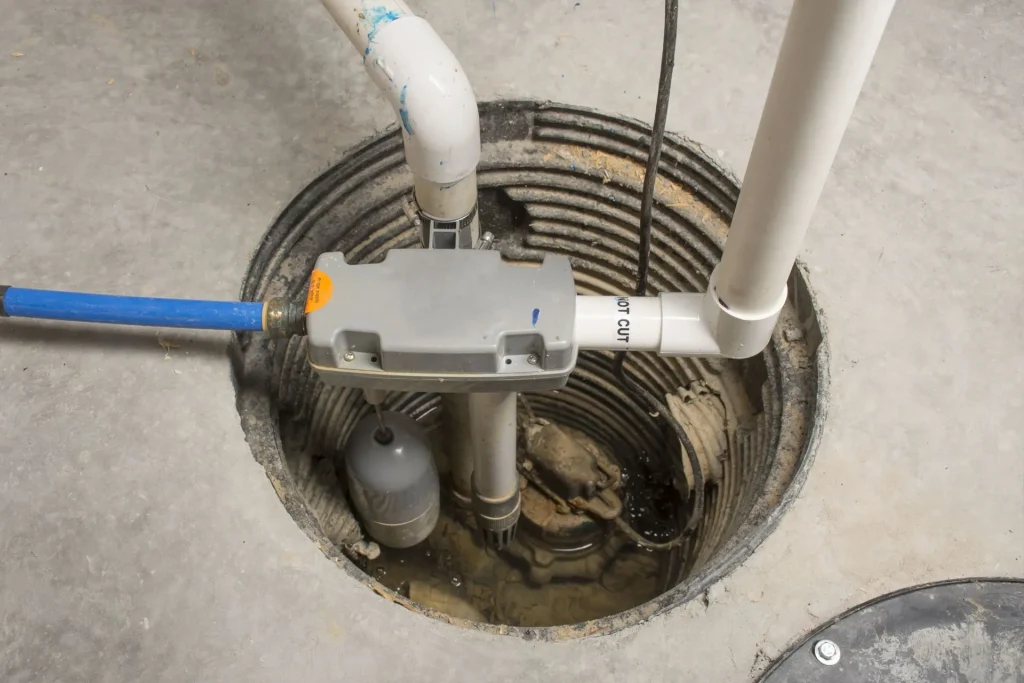
For many homes with high water tables, interior drainage is the most practical form of basement waterproofing. It does not stop water from reaching the outer side of the wall, but it relieves pressure by giving that water a controlled path to a sump basin and pump before it spreads across the floor.
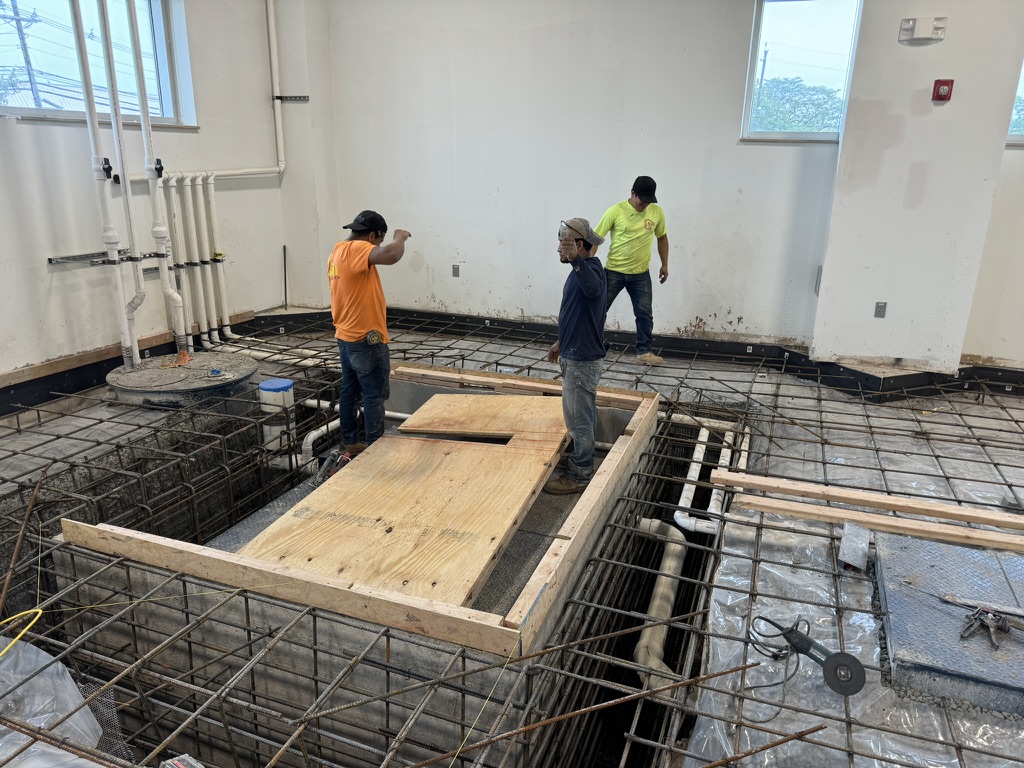
The typical interior system involves cutting a narrow trench along the perimeter of the basement slab, installing perforated drain pipe in washed stone, and directing collected water into a sump pit. The slab is then patched over the trench. Depending on the wall type and the installer’s method, a wall drainage channel or vapor gap may also be included to direct seepage from the wall down into the drain system.
This approach is especially effective when the visible symptom is water at the cove joint or seepage through the lower wall. It can also be installed from inside, which avoids major excavation and makes it feasible in homes with limited exterior access. In many finished basements, the lower portion of drywall and trim will need to be removed during installation, but the disruption is still much less than exterior trenching through decks, driveways, or planted areas.
The weakness of interior systems is philosophical as much as technical. They manage water rather than excluding it entirely. That is not necessarily a failure. It is simply a different strategy. In a high water table area, water management is often the most realistic strategy available. The key is making sure the system is robust, serviceable, and paired with good humidity control.
I tell homeowners to pay close attention to the details that separate a durable installation from a rushed one. The sump basin should be sized appropriately and sealed if radon or moisture control is a concern. The discharge line should include a check valve and freeze-resistant routing where climate requires it. The concrete patch should be sound and level. And the installer should be able to explain exactly how water from wall seepage enters the drain path, not just how the trench pipe works.
Sump pumps are not optional in this situation
In a basement affected by a high water table, the sump pump is the heart of the system. Without it, an interior drain is just a collection point. With the right pump and backup plan, it becomes active protection.
Primary pumps are usually either pedestal or submersible. In most finished or semi-finished basements, submersible pumps are quieter and better protected. Cast iron and stainless components tend to hold up better than lighter-duty plastic units when the pump cycles frequently. The correct capacity depends on inflow rate, lift height, and discharge distance, not just horsepower on the box.
The backup matters almost as much as the main pump. Storms knock out power. High water events often coincide with exactly the conditions that strain the electrical grid. A battery backup can keep a system running during short outages and moderate flow conditions. In homes with chronic groundwater intrusion, some owners step up to a secondary AC pump on a separate circuit, a larger battery reserve, or even a generator connection.
One practical lesson from the field is that alarms get ignored until they save a basement once. A high-water alarm is inexpensive compared with flooring, drywall, furniture, and the mold remediation bill that can follow a pump failure. Homeowners should also test the system, clean the pit as needed, and make sure the discharge point remains clear. I have seen carefully installed waterproofing systems rendered useless by a buried outlet line after one winter.
Sealants and coatings have a place, but it is limited
Many products sold to homeowners promise to seal a basement from the inside. Some can reduce dampness. A few can help as part of a broader system. None should be mistaken for a complete answer to hydrostatic pressure.
Interior masonry sealers and waterproof coatings can slow vapor transmission through porous walls. They may improve the feel of the space and reduce minor dampness in basements with marginal issues. They can also fail dramatically if applied to a wall with active water pressure behind it. The coating blisters, flakes, or simply lets water find another route, often lower down or through the floor.
Crack injection is a different category and can be very effective when the problem is a discrete crack in poured concrete. Polyurethane injection is commonly used for active https://ezlocal.com/nj/west-caldwell/waterproofing-contractor/0918145021 water leaks because it expands and can seal against moisture. Epoxy is more structural but less suitable for wet conditions. The challenge is that many basements with high water tables do not leak through only one crack. They leak because the groundwater has many access points. Sealing the obvious crack helps, but it does not change the broader pressure conditions.
This is where experience matters. A contractor who recommends coating everything in sight without talking about drainage and pressure relief is usually solving for appearance, not performance.
Crawl spaces and partial basements need a different lens
Not every wet below-grade space is a full basement. Some homes in wet regions have a partial basement under one section and a crawl space under another. High water tables affect both, and the transition areas can become trouble spots.
In a crawl space, standing water under the vapor barrier, persistently wet piers, and musty air entering the living space are common signs. Encapsulation with a heavy vapor barrier, perimeter drainage, and a sump system can work very well, but only when outside drainage is also addressed. If the water table rises enough, the encapsulation system has to account for bulk water, not just humidity.
Partial basements sometimes fool owners because the finished portion gets the attention while the crawl space quietly contributes moisture to the whole house. Floors cup, HVAC equipment corrodes, and indoor humidity climbs. Good basement waterproofing planning looks at the entire footprint, not just the space where water is easiest to see.
What homeowners should evaluate before choosing a system
A good decision usually comes from answering a few practical questions honestly:
- Does water appear only after intense rain, or after several wet days when the ground is saturated?
- Is the leakage concentrated at one crack or window, or does it show up along the wall-floor joint in multiple areas?
- Can the exterior foundation be accessed without major demolition of hardscape or neighboring property?
- Will the basement remain unfinished utility space, or is it intended for living area with finished walls and floors?
- Is there a reliable discharge route for collected water, and what happens if the power goes out?
Those answers shape the recommendation. A single poured-wall crack with otherwise dry conditions might justify a targeted repair plus better grading. A basement with chronic cove seepage on three sides of the house almost always points toward drainage and sump work. A homeowner planning a full high-end basement finish should think hard about redundancy, battery backup, and moisture-tolerant materials even after waterproofing is complete.
Material choices matter after the water is under control
Once the active water problem is addressed, the finishing choices in the basement should match the residual risk. This is where many successful waterproofing projects get undermined. The space is dry for six months, confidence rises, and then absorbent materials go back into a part of the house that still lives closer to the water table than people would like to admit.
Rigid foam insulation, closed-cell spray foam in appropriate assemblies, inorganic trim materials in vulnerable areas, tile, luxury vinyl, and removable base details all tend to perform better than paper-faced drywall and plush carpet on pad. Even with a good system, I prefer materials that can tolerate an incident without turning a minor event into a full gut renovation.
Humidity control remains important too. Waterproofing and dehumidification are not interchangeable, but they are complementary. In many basements, keeping relative humidity under control protects framing, contents, and air quality. A dedicated dehumidifier with a permanent drain is often more effective than relying on the home’s main HVAC system to handle below-grade moisture.
Cost, disruption, and the trade-offs people actually live with
Homeowners naturally ask which option is best, but the more useful question is often which option best fits the house and the tolerance for disruption. Exterior excavation can be highly effective and may offer the most complete barrier, but it is expensive and messy. Interior drainage is less invasive and often highly reliable, but it accepts that water reaches the foundation and focuses on control. Crack repairs can be excellent targeted fixes, but they are rarely enough in a genuine high water table situation. Coatings can play a supporting role, but they are not pressure relief.
There is also the issue of serviceability. An interior sump and drain system is visible, accessible, and easier to maintain or upgrade later. Exterior systems are hidden once backfilled. That does not make them inferior, but it does mean the quality of installation is crucial because repairs are harder.
I have worked with homeowners who regretted overspending on excavation when a well-designed interior system would have met their actual needs. I have also seen owners spend money twice because they tried paint and patch products for years before accepting that groundwater management was required. The right answer is not always the most expensive answer. It is the one that matches the mechanism of failure.
When professional diagnosis is worth every penny
There is a point where observation from the homeowner is no longer enough. If you see bowing walls, slab heave, recurring pump overload, rusty steel columns at the base, mold growth that returns quickly, or water entering from multiple pathways, bring in a qualified basement waterproofing professional and, if structural movement is suspected, a structural engineer. High water tables can expose both moisture issues and foundation vulnerabilities, and those need to be separated carefully.
Documentation helps. Photos after storms, notes about when the water appears, where it starts, how quickly it rises, and when the sump runs can tell a contractor more than a brief walk-through on a dry day. The better the diagnosis, the less likely you are to pay for a system designed around guesses.
A durable strategy looks boring on paper
The best outcomes usually come from a package of sensible measures rather than a miracle fix. Roof water is pushed well away from the house. The ground slopes properly. The foundation has a drainage path. The sump pump is sized correctly and backed up. Cracks are sealed where appropriate. The basement is finished with materials that can tolerate the environment. Humidity is managed. The owner checks the system a few times a year and does not wait for a storm to find out a discharge line froze or a battery failed.
That may sound almost ordinary, and that is the point. Homes with high water tables rarely stay dry because of a single clever product. They stay dry because the pressure is respected, the water is given somewhere to go, and the system is maintained like the critical part of the house it is.
For homeowners dealing with recurring wetness, that mindset shift is often the real turning point. Once you stop thinking of the basement as a room that merely needs sealing and start treating it as a below-grade structure in constant contact with groundwater, the waterproofing options become much clearer.
ARD Waterproofing
98 Smull Ave, West Caldwell, NJ 07006, United States
+1 917-691-8411
FAQ About Basement Waterproofing
Can you 100% Waterproof a Basement in West Caldwell?
A properly designed system can substantially reduce basement water intrusion, but no method can promise protection against every flood, equipment failure, or future change in site conditions. The first step is identifying whether moisture comes from surface runoff, groundwater, plumbing, or condensation. Solutions may include grading and gutter improvements, drainage, foundation repairs, and a sump system. Review the specific coverage and exclusions of any written warranty.
How much does it cost to professionally waterproof a basement in NJ?
There is no single price that fits every basement. Cost depends on the cause of the leak, the area needing work, access, excavation requirements, drainage design, sump equipment, and restoration of disturbed finishes or landscaping. Request an on-site assessment and an itemized written estimate that explains the scope, exclusions, and maintenance requirements before comparing proposals.
How long does foundation waterproofing last in West Caldwell, NJ?
Service life varies with the waterproofing materials, installation quality, soil and water conditions, and maintenance. Drainage components and pumps may require servicing or replacement even when other parts of the system remain functional. Keep gutters, drainage outlets, and sump equipment maintained, and have recurring leaks or changes in foundation condition assessed. Ask for product-specific expectations and written warranty terms rather than relying on one lifespan for the entire system.